We all learn in different ways. Personally I learn better through visual aids, but other prefer auditory or a more kinesthetic approach. Media clips work really well in demonstrating learning points.
I find it’s a great way to keep your audience engaged, awake, and ready to learn.
Here we have the original Karate Kid movie that has some great mentoring themes and success strategies.
Ex: The student in this movie is taught by the Karate Master in a rather unique way. The student can’t understand why Mr. Miyagi is having the student wax the car, paint the fence, or even sand the floor. The mentor, being Mr. Miyagi, helps him understand he is building the foundation of the fundamentals by working important muscles so that these skills would become automatic. This movie is a great example of mentoring techniques and it would be helpful to watch and discuss it with your mentoring partner.
If you have any cool ideas for mentoring programs be sure to leave some feedback!
Monday, October 22, 2012

Wednesday, September 19, 2012
Don't get an "F" in your mentoring program!

Whenever I talk with someone who really knows how to be a mentor, they are usually quite aware that they impose these little tests on their pupils, especially early on in the program. In case you're a mentor and not aware of these sometimes subliminal tests, here's a short list of some of the common ones that protégés encounter:
TESTS BY MENTORS FOR THEIR PROTÉGÉS
Are you like me?
More often than not mentors may be consciously or unconsciously looking for someone who is similar to themselves. If you're personality is a complete 180 from your mentors' then you may have to start looking for a new program soon! (in social psychology there is a theory called the similarity attraction paradigm which is just that people like to be with people who are similar).
Do I like you as a person?
It is one thing to know someone as an acquaintance, but what are they like once you get to know the real them? It might be helpful before a mentoring program begins to partake in a little self disclosure about your interests outside of class. To be in a long term mentoring relationship with someone means that you're going to get to know them on a deeper level, and if you don't like what you find there then it will most likely fail.
Do you measure up?
This is a big one. Mentors generally want to know that you're the type of student who'll succeed and maybe even surpass their high standards.
Do you follow through?
In other words, if the protégé commits to a certain goal, did they stick with it till the end?
Do you listen?
Sometimes mentors offer suggestions that seem wacky or off base to their pupils- I am reminded of the movie “Karate Kid.” The main character, Daniel, thought Mr. Miagi was just trying to get him to do his chores for him, but in reality “wax on, wax off” is in fact strengthening his resolve and building his muscle memory.
Will you learn from mistakes?
Everyone messes up from time to time, but mentors want to know that if you make a mistake, you'll bounce back and handle it with grace. Most people that know how to be a mentor have little patience for whining or complaints.
I hope your take this questions into consideration whether you're looking to find a mentor or are currently in a mentoring relationship. In either case, these will help you tremendously.
Friday, August 10, 2012
Olympic Village House Moms and Mentoring!

In the Olympic Village the athletes are asked to live, eat and socialize together during the most intense, pressure filled time of their lives. Talk about a wide range of emotions and personalities-all trying to coexist together for this short time! In a setting like this there is sure to be triumph and heartbreak, empathy and jealousy, hate and love (possibly even the amorous kind.) The “just another day at the office” lifestyle couldn't possibly be further from what they're going through.
The Olympic Village is also home to dozens of coaches and mentors who have been tasked with not only offering career advice to these young stars, but also with keeping them organized and mentally focused. But what if these mentoring programs weren't in place? What if all that responsibility fell to one person—an Olympic Village House Mom! What a hard job that would be, am I right? What type of personalities would thrive in that stressful environment, and which ones would crumble?
In the comments, see if you can 'Weird Science' the perfect Olympic House Mom for the occasion.
Who would she think like?
What does she look like?
Who has a personality similar to hers?
How would she cope with the stress?
Looking forward to your answers!!
Image Source: www.telegraph.co.uk
Thursday, July 26, 2012
Webisodes are the New Startups to Watch

In this blog we like to take a look at different shows like The Office and Undercover Boss to examine organizational behavior, and mentoring and success strategies as they relate to the entertainment industry. Television shows produced by the top networks are almost an exact microcosm of the companies that spawned them. They have all the aforementioned hierarchies and structures in place. Every employee involved, from the director to the key grip is a specialist in their niche.
This, however, is definitely not the case in the emerging webisode industry. Like any other start-up company, webisodes ask employees to be more varied and excel in multiple functions. The director is also a producer, show runner and production assistant. Check out the links to the two very different webisodes below. The first is from a show called Epic Meal Time. The show has an enormous following, but a format structured specifically for ten minute web videos. The is taken from Live from Daryl’s House. In this show Daryl Hall of Hall and Oates fame invites musicians to his country house to hangout and perform. The success of this show has led to it being picked up for network television.
My question to you is this: How do you think mentoring and success strategies play a role in Epic Meal Time where hierarchy and specialization have yet to take root? And do you think a more corporate approach as seen in Live from Daryl’s House improves or diminishes the webisodes authenticity?
Looking forward to hearing your take on this!
Epic Meal Time: Ultimate Pizza Sandwich
Live from Daryl’s House: Episode 54 – Butch Walker
Image Credit: EpicMealTime.com
Wednesday, July 18, 2012
Organizational Behavior and Casual Friday

Today, most employees are too smart to fall for this sort of 'Casual Dress Friday' trickery, and companies are much more cautious about handing out fringe benefits that damage productivity. Nowadays employers are mainly focused on the bottom line. So by now you're probably asking, how does this change/addition affect me?
In May of 2011 I wrote a blog entry entitled: Undercover Boss: CEO or Santa Claus. I found the comment below particularly impressive. It provides a link to a clip regarding the different fringe benefits that employees of Google are receiving. Google's success strategy has been to release several programs that in my opinion are a giant leap forward in fringe benefits. The programs provide needed resources with an attached financial/bottom line value for both the employer and employee.
One great example is that Google provides its employees with free breakfast and lunch- every day! By providing complimentary meals to employees Google keeps them on site, interacting and brainstorming with each other. This not only keeps them happy but all but guarantees an increase in productivity. Additionally, employees can do the math to figure out that these extra meals are essentially a pay increase.
So here is my challenge to you. Read Nicole’s response and watch the video clip, then in the comments section tell me what additional benefits some companies could offer that would meet fulfill the needs of equity theory and help bottom line of the company.
Get creative with your responses! :)
Nicole Uy says:
April 7, 2012 at 7:13 pm
Personally, I love watching Undercover Boss too. I’ve watched different episodes featuring the CEOs of Hooters, 7-Eleven, Choice Hotels Int’l, Great Wolf Lodge and etc. While I believe that these CEOs who have volunteered to go undercover have good and honest intentions, I think that the “temporary/ one-time rewards” they offer to some employees are not necessarily beneficial. Aside from the fact that these rewards are only given to a select few, I don’t think the CEOs can really improve the condition of their companies unless they truly address the main issue: treat employees/ human capital better by offering more benefits and perks. Although it may be costly for companies, we have learned in class that the benefits definitely outweigh the burdens. When employees are being treated well and when they are satisfied, there is higher productivity, better customer service, and generally, a happy and warm atmosphere.
http://www.youtube.com/watch?v=_QqT38QRA84
Aside from companies like SAS and Zappos that we have discussed in class, Google also treats its employees well. The video clip I found talks about just some of the numerous perks of working at Google, which is currently the 4th best company to work for. As you can see from the video, Google definitely spoils its employees. Not only does Google provide gourmet food, free laundry services, free massages, and gym facilities, it also provides free bus services to the office! Therefore, I think that by truly focusing on the wellness and happiness of employees, Google is able to utilize them to their full potential, as well as benefit from their various skills and knowledge. Additionally, unlike the ones offered in Undercover Boss, these benefits are long-term and permanent. Also, they are available to every single employee, from the lower levels to the highest levels.
Thus, by offering these types of benefits to employees, they can become fully motivated and eager to work. Additionally, all of people’s needs are being fully satisfied according to Maslow’s Hierarchy of Needs Theory.
Thursday, July 12, 2012
Organizational Behavior and Television MashUps
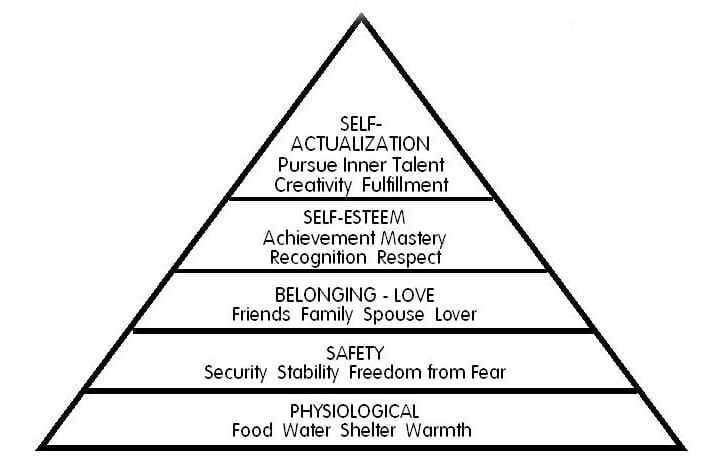 In September of last year my post What Do You Need From Work touched a nerve with readers generating more than 200 responses! You showed that you are as passionate about pop-culture as you are about office dynamics and organizational behavior.
 I thought it would be fun to apply Maslow’s Hierarchy to a mashup TV world. Two of the television shows sited in reader responses were HBO’s Entourage and NBC’s The Office. Let’s imagine a world where Ari Gold and Michael Scott switch places. How would that switch effect the individual work environments?
Start with a level from Maslow’s Hierarchy and imagine how it would be manifested in this mashup. Here is an example:
Love and Belonging
Michael Scott would try too hard to become friends with Lloyd, putting his clients aside in an effort to woo his assistant. Freaked out his new employer’s affection, Lloyd would reluctantly agree to take Michael clubbing leading to more awkwardness than acceptance.
Use your imagination and have fun with this. If you are not familiar with these shows then tell me what other mashups would make for an interesting shift in work place dynamics. I can’t wait to read your responses!
I would like to offer special thanks to Jonathan and Rachel Horrigan for their Entourage and The Office specific comments in response to What Do You Need From Work.
Tuesday, June 12, 2012
Best Career Advice I've Ever Gotten: ASK!

Yesterday, I experienced a corporate miracle. Priceline.com issued me a refund, going against their strict policy. I was so happy by this experience I started reflecting on the power of asking and who gave me this profound career growth advice. I realized quickly that I know exactly who I learned this message from: I learned the power to ASK from one of my first mentors.
So here's my tale. I'd been working as a consultant at a major media organization in Los Angeles and pursuing my doctoral studies throughout the 90’s. I was happy as could be; bringing in $50/hour teaching classes like Supervision 101 and Assertive Communication. I was happy as could be, that is, until the day I found out that all of my co-workers were making $100/hour! Just like that I went from being engaged and delighted with my work to pissed off and bitter. I could not understand why my client (who was also my mentor at the time) was not compensating me as well as the others! I looked at the obvious reasons first: Were they better at the job than I was? Nope, my teaching evaluations were very high and competitive with the rest of them. Was it because I was younger or doing lower level work? Nope, we were all about the same age and teaching very comparable courses. I fussed and whined to friends and family members, until I finally mustered the courage to go in and speak to my mentor/client about it. First off, I told her that I had found out that the other trainers were making $100/hour. She confirmed this was true. I asked her if my work was not as good as theirs and she said, absolutely not; my work was just as good as theirs. So then I said, “Well why am I not making as much as the rest of them?” And she replied, “Because you never asked.” She explained that she had her manager hat on when making compensation decisions and that when I was initially hired I had asked for $50/hour which she had given to me and I'd been producing and happy. Then, I said, “I am asking now- I want to make $100/hour. Will you start paying me $100 an hour?” She said, “Of course!” I remember asking her why didn’t she offer me $100/hour right out of the gate and she said, “No one will ever just give you what you want in life – you have to know what your worth and what you want and go ask for it. This is of the best success strategies I ever learned. To this day, this mentor is one of my closest friends and influences and I am profoundly grateful for that advice.
So- back to Priceline and what happened yesterday. Unfortunately, I have a colleague in the Organizational Behavior industry experiencing a medical emergency right now rendering her unable to travel this week. If you look at the Priceline web site and read the fare restrictions it is pretty clear that there are no changes anyway, anyhow, so sorry too bad! When I gathered the courage to finally call them, the wait was daunting and the music they play while you're on hold repeats reiterates their 'no returns' policy. When I finally got a human being on the phone, I started with “Look I understand your policy and it makes sense, but will you listen to my story and consider making an exception.” Surprisingly, they did so and the folks on the other end of the phone abandoned their script and acted like kind humans. They made an exception and my friend got a large chunk of their money back. If I hadn't asked, that would have never occurred.
Thanks to my early mentor I remembered: You must ask to get what you want. A few tips I have learned: a) You must ask nicely, b) You must be prepared for a No and at a certain point walk away and come up with a Plan B, c) You must give the person you are asking solutions and choices and be clear about what you want.
So- what lessons or career advice have you learned from mentors? When did you ask and get what you wanted? What will you ask for today?
Subscribe to:
Posts (Atom)