Organizational structure and behavior are pretty well mapped out in corporate America. Employees are split into departments,assigned specialized functions, and manage the pretty much the same tasks day in and day out. From the Chief Financial Officer to the lowly office assistant, everyone knows their place and purpose. At a start-up, however, this hierarchy structure gets tossed aside for something more malleable. The CEO is just as likely to bring in coffee and bagels or lock-up the office at night as the rookie intern out of college intern is.
In this blog we like to take a look at different shows like The Office and Undercover Boss to examine organizational behavior, and mentoring and success strategies as they relate to the entertainment industry. Television shows produced by the top networks are almost an exact microcosm of the companies that spawned them. They have all the aforementioned hierarchies and structures in place. Every employee involved, from the director to the key grip is a specialist in their niche.
This, however, is definitely not the case in the emerging webisode industry. Like any other start-up company, webisodes ask employees to be more varied and excel in multiple functions. The director is also a producer, show runner and production assistant. Check out the links to the two very different webisodes below. The first is from a show called Epic Meal Time. The show has an enormous following, but a format structured specifically for ten minute web videos. The is taken from Live from Daryl’s House. In this show Daryl Hall of Hall and Oates fame invites musicians to his country house to hangout and perform. The success of this show has led to it being picked up for network television.
My question to you is this: How do you think mentoring and success strategies play a role in Epic Meal Time where hierarchy and specialization have yet to take root? And do you think a more corporate approach as seen in Live from Daryl’s House improves or diminishes the webisodes authenticity?
Looking forward to hearing your take on this!
Epic Meal Time: Ultimate Pizza Sandwich
Live from Daryl’s House: Episode 54 – Butch Walker
Image Credit: EpicMealTime.com
Thursday, July 26, 2012
Wednesday, July 18, 2012
Organizational Behavior and Casual Friday
Way before I decided that my dream was to teach organizational behavior, mentoring and success strategies, I worked in a mid size corporate office for a time. The CEO introduced a new rule one day that allowed employees to bring their pets, mostly dogs, to work on Friday’s. He didn't realized, however, that this little fringe benefit didn't account for equity theory, or "fairness" in the work place. While some of the employees loved bringing their pets to work and showing them off, others turned their noses up at the "pet shop environment" the office had become. I'm not sure if the CEO ever caught on to the inequity but what they did notice was that productivity was steadily decreasing with all distractions these furry little critters caused. As a result, Bring Your Pet Friday was put on a permanent hiatus.
Today, most employees are too smart to fall for this sort of 'Casual Dress Friday' trickery, and companies are much more cautious about handing out fringe benefits that damage productivity. Nowadays employers are mainly focused on the bottom line. So by now you're probably asking, how does this change/addition affect me?
In May of 2011 I wrote a blog entry entitled: Undercover Boss: CEO or Santa Claus. I found the comment below particularly impressive. It provides a link to a clip regarding the different fringe benefits that employees of Google are receiving. Google's success strategy has been to release several programs that in my opinion are a giant leap forward in fringe benefits. The programs provide needed resources with an attached financial/bottom line value for both the employer and employee.
One great example is that Google provides its employees with free breakfast and lunch- every day! By providing complimentary meals to employees Google keeps them on site, interacting and brainstorming with each other. This not only keeps them happy but all but guarantees an increase in productivity. Additionally, employees can do the math to figure out that these extra meals are essentially a pay increase.
So here is my challenge to you. Read Nicole’s response and watch the video clip, then in the comments section tell me what additional benefits some companies could offer that would meet fulfill the needs of equity theory and help bottom line of the company.
Get creative with your responses! :)
Nicole Uy says:
April 7, 2012 at 7:13 pm
Personally, I love watching Undercover Boss too. I’ve watched different episodes featuring the CEOs of Hooters, 7-Eleven, Choice Hotels Int’l, Great Wolf Lodge and etc. While I believe that these CEOs who have volunteered to go undercover have good and honest intentions, I think that the “temporary/ one-time rewards” they offer to some employees are not necessarily beneficial. Aside from the fact that these rewards are only given to a select few, I don’t think the CEOs can really improve the condition of their companies unless they truly address the main issue: treat employees/ human capital better by offering more benefits and perks. Although it may be costly for companies, we have learned in class that the benefits definitely outweigh the burdens. When employees are being treated well and when they are satisfied, there is higher productivity, better customer service, and generally, a happy and warm atmosphere.
http://www.youtube.com/watch?v=_QqT38QRA84
Aside from companies like SAS and Zappos that we have discussed in class, Google also treats its employees well. The video clip I found talks about just some of the numerous perks of working at Google, which is currently the 4th best company to work for. As you can see from the video, Google definitely spoils its employees. Not only does Google provide gourmet food, free laundry services, free massages, and gym facilities, it also provides free bus services to the office! Therefore, I think that by truly focusing on the wellness and happiness of employees, Google is able to utilize them to their full potential, as well as benefit from their various skills and knowledge. Additionally, unlike the ones offered in Undercover Boss, these benefits are long-term and permanent. Also, they are available to every single employee, from the lower levels to the highest levels.
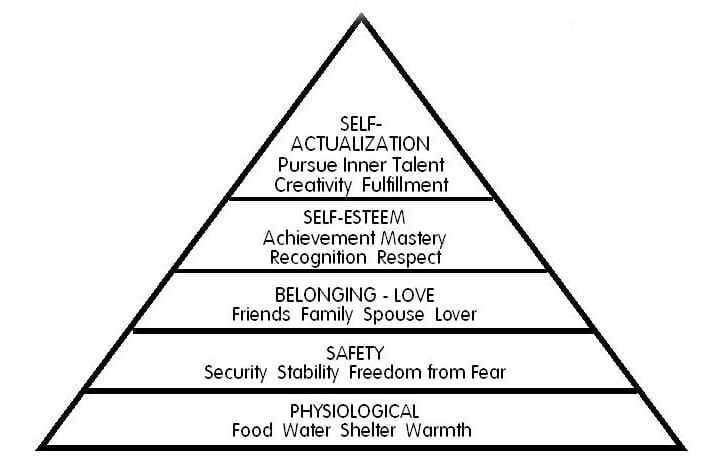
Thus, by offering these types of benefits to employees, they can become fully motivated and eager to work. Additionally, all of people’s needs are being fully satisfied according to Maslow’s Hierarchy of Needs Theory.
Today, most employees are too smart to fall for this sort of 'Casual Dress Friday' trickery, and companies are much more cautious about handing out fringe benefits that damage productivity. Nowadays employers are mainly focused on the bottom line. So by now you're probably asking, how does this change/addition affect me?
In May of 2011 I wrote a blog entry entitled: Undercover Boss: CEO or Santa Claus. I found the comment below particularly impressive. It provides a link to a clip regarding the different fringe benefits that employees of Google are receiving. Google's success strategy has been to release several programs that in my opinion are a giant leap forward in fringe benefits. The programs provide needed resources with an attached financial/bottom line value for both the employer and employee.
One great example is that Google provides its employees with free breakfast and lunch- every day! By providing complimentary meals to employees Google keeps them on site, interacting and brainstorming with each other. This not only keeps them happy but all but guarantees an increase in productivity. Additionally, employees can do the math to figure out that these extra meals are essentially a pay increase.
So here is my challenge to you. Read Nicole’s response and watch the video clip, then in the comments section tell me what additional benefits some companies could offer that would meet fulfill the needs of equity theory and help bottom line of the company.
Get creative with your responses! :)
Nicole Uy says:
April 7, 2012 at 7:13 pm
Personally, I love watching Undercover Boss too. I’ve watched different episodes featuring the CEOs of Hooters, 7-Eleven, Choice Hotels Int’l, Great Wolf Lodge and etc. While I believe that these CEOs who have volunteered to go undercover have good and honest intentions, I think that the “temporary/ one-time rewards” they offer to some employees are not necessarily beneficial. Aside from the fact that these rewards are only given to a select few, I don’t think the CEOs can really improve the condition of their companies unless they truly address the main issue: treat employees/ human capital better by offering more benefits and perks. Although it may be costly for companies, we have learned in class that the benefits definitely outweigh the burdens. When employees are being treated well and when they are satisfied, there is higher productivity, better customer service, and generally, a happy and warm atmosphere.
http://www.youtube.com/watch?v=_QqT38QRA84
Aside from companies like SAS and Zappos that we have discussed in class, Google also treats its employees well. The video clip I found talks about just some of the numerous perks of working at Google, which is currently the 4th best company to work for. As you can see from the video, Google definitely spoils its employees. Not only does Google provide gourmet food, free laundry services, free massages, and gym facilities, it also provides free bus services to the office! Therefore, I think that by truly focusing on the wellness and happiness of employees, Google is able to utilize them to their full potential, as well as benefit from their various skills and knowledge. Additionally, unlike the ones offered in Undercover Boss, these benefits are long-term and permanent. Also, they are available to every single employee, from the lower levels to the highest levels.
Thus, by offering these types of benefits to employees, they can become fully motivated and eager to work. Additionally, all of people’s needs are being fully satisfied according to Maslow’s Hierarchy of Needs Theory.
Thursday, July 12, 2012
Organizational Behavior and Television MashUps
I thought it would be fun to apply Maslow’s Hierarchy to a mashup TV world. Two of the television shows sited in reader responses were HBO’s Entourage and NBC’s The Office. Let’s imagine a world where Ari Gold and Michael Scott switch places. How would that switch effect the individual work environments?
Start with a level from Maslow’s Hierarchy and imagine how it would be manifested in this mashup. Here is an example:
Love and Belonging
Michael Scott would try too hard to become friends with Lloyd, putting his clients aside in an effort to woo his assistant. Freaked out his new employer’s affection, Lloyd would reluctantly agree to take Michael clubbing leading to more awkwardness than acceptance.
Use your imagination and have fun with this. If you are not familiar with these shows then tell me what other mashups would make for an interesting shift in work place dynamics. I can’t wait to read your responses!
I would like to offer special thanks to Jonathan and Rachel Horrigan for their Entourage and The Office specific comments in response to What Do You Need From Work.
Tuesday, June 12, 2012
Best Career Advice I've Ever Gotten: ASK!

Yesterday, I experienced a corporate miracle. Priceline.com issued me a refund, going against their strict policy. I was so happy by this experience I started reflecting on the power of asking and who gave me this profound career growth advice. I realized quickly that I know exactly who I learned this message from: I learned the power to ASK from one of my first mentors.
So here's my tale. I'd been working as a consultant at a major media organization in Los Angeles and pursuing my doctoral studies throughout the 90’s. I was happy as could be; bringing in $50/hour teaching classes like Supervision 101 and Assertive Communication. I was happy as could be, that is, until the day I found out that all of my co-workers were making $100/hour! Just like that I went from being engaged and delighted with my work to pissed off and bitter. I could not understand why my client (who was also my mentor at the time) was not compensating me as well as the others! I looked at the obvious reasons first: Were they better at the job than I was? Nope, my teaching evaluations were very high and competitive with the rest of them. Was it because I was younger or doing lower level work? Nope, we were all about the same age and teaching very comparable courses. I fussed and whined to friends and family members, until I finally mustered the courage to go in and speak to my mentor/client about it. First off, I told her that I had found out that the other trainers were making $100/hour. She confirmed this was true. I asked her if my work was not as good as theirs and she said, absolutely not; my work was just as good as theirs. So then I said, “Well why am I not making as much as the rest of them?” And she replied, “Because you never asked.” She explained that she had her manager hat on when making compensation decisions and that when I was initially hired I had asked for $50/hour which she had given to me and I'd been producing and happy. Then, I said, “I am asking now- I want to make $100/hour. Will you start paying me $100 an hour?” She said, “Of course!” I remember asking her why didn’t she offer me $100/hour right out of the gate and she said, “No one will ever just give you what you want in life – you have to know what your worth and what you want and go ask for it. This is of the best success strategies I ever learned. To this day, this mentor is one of my closest friends and influences and I am profoundly grateful for that advice.
So- back to Priceline and what happened yesterday. Unfortunately, I have a colleague in the Organizational Behavior industry experiencing a medical emergency right now rendering her unable to travel this week. If you look at the Priceline web site and read the fare restrictions it is pretty clear that there are no changes anyway, anyhow, so sorry too bad! When I gathered the courage to finally call them, the wait was daunting and the music they play while you're on hold repeats reiterates their 'no returns' policy. When I finally got a human being on the phone, I started with “Look I understand your policy and it makes sense, but will you listen to my story and consider making an exception.” Surprisingly, they did so and the folks on the other end of the phone abandoned their script and acted like kind humans. They made an exception and my friend got a large chunk of their money back. If I hadn't asked, that would have never occurred.
Thanks to my early mentor I remembered: You must ask to get what you want. A few tips I have learned: a) You must ask nicely, b) You must be prepared for a No and at a certain point walk away and come up with a Plan B, c) You must give the person you are asking solutions and choices and be clear about what you want.
So- what lessons or career advice have you learned from mentors? When did you ask and get what you wanted? What will you ask for today?
Thursday, May 31, 2012
4 Things Mentors Want From Their Proteges
I get asked all the time, “What do mentors really want from me anyway?” I wish there was a magic potion I could share with you that would create perfectly satisfying mentor-protégé relationships. Although the mysterious alchemy between individual mentor-protégé pairs is usually quite unique, there are four general desires that most mentors would have from their protégés. If you're hungry for more, Susan Murphy and I discuss these ideas further in chapter 4 of Power Mentoring.
1) Mentors want protégés to be like themselves. Remember the movie Austin Powers and the mini me character (for those who are familiar please pause here for evil laugher and pinky finger in mouth!)?! I always think about that character when I consider this concept. I have been writing about perceived similarity (which comes out of social psychology) for a long time now. It is basically the idea that successful mentoring relationships need to have some basis in similarity. In fact, sometimes mentors are initially attracted to certain protégés because they see a younger version of themselves in their protégé or they share similarity in salient demographic characteristics (so a scientist who sees herself in the budding young scientist). However, now we know especially with the prevalence of online mentoring that people can also see similarity in deeper level characteristics (goals, values, interests) which are even more important for figuring out how to be a mentor in the relationship in the long term.
So, how can all of this actually help you? I recommend that you research mentoring programs, find a would-be mentor and get to know them and actively look for areas of perceived similarity. Start with surface level similarity (when I have designed youth mentoring for at risk youth I start with very basic stuff like favorite TV shows, food etc.). Additionally, when getting to know each other initially, you shouldn't discount surface level similarity for bonding and developing a rapport-it might be around favorite books, a love for pets, reality TV or shoes - in other words safe personal topics are okay to broach. When getting to know a potential mentor try to think of some clever getting-to-know you questions that might uncover a hidden area of similarity (For example- I love time travel books so I sometimes ask “If you could go back in time, where would you go and what would you do?” Or I might ask ‘What countries are on your bucket list to travel to and where are some of the favorite place you have seen?)
2) Mentors want protégés who add value with different skills/perspectives. For example, when my co-author and I conducted our interviews for Power Mentoring we interviewed David Dreir (R-CA) who is a Republican. He talked about mentoring ACROSS political parties including mentoring Democrats. He talked about mentoring the junior members of congress in terms of norms, networking, etc. We also spoke with a Disney executive who gave career advice to a Nickelodeon executive - so mentoring across barriers can be very enlightening. Think about how you can complete and add to the mentor’s knowledge base/skills/connections. Do not discount the value of just adding a perspective they have not considered or unbridled enthusiasm.
3) Mentors want to see a compelling characteristic/skill or high potential. In other words, mentors are attracted to people they feel have some compelling interest, talent, or gift. For example, at the end of the semester I often recruit research assistants by picking out the brightest student I liked the best and approaching them with a job after the final is over. Many of these turn into long term mentoring relationships. So if you are good at what you do, you may just naturally attract mentors… although it is best not to wait for that but instead leverage what you are good at.
4) Mentors want protégés who are willing to learn. Mentors want to teach those who want to learn. The most important way to demonstrate that you are willing to learn is by following up! In other words, take any suggestions given by the mentor and loop back and communicate results. Also, by take a suggestion, idea etc. and build on it- so if a mentor suggests reading several blogs to develop ideas for creative writing I suggest that the protégé comes back having started their own blog and has already posted two stories! I think the other key here is to learn from mistakes and take risks. I think most mentors can forgive mistakes and mis-steps as long as there is learning and personal responsibility taken. And here is one other idea – humility. Tony Hsieh, the CEO of Zappos discusses this idea in this book. I interviewed Tony a few years ago and he is quite fascinating. Tony is another Harvard wunderkind who sold his first business in his twenties for millions of dollars. Now he runs Zappos and has created a corporate culture that focuses on happiness. He talks about hiring and keeping people who are humble. I think sometimes super smart people do not always have opportunities for humility or they are not always framed this way… and yet being humble is a big part of being willing to learn. This is one most people can work on including yours truly.
Image source: Smartregion.org
1) Mentors want protégés to be like themselves. Remember the movie Austin Powers and the mini me character (for those who are familiar please pause here for evil laugher and pinky finger in mouth!)?! I always think about that character when I consider this concept. I have been writing about perceived similarity (which comes out of social psychology) for a long time now. It is basically the idea that successful mentoring relationships need to have some basis in similarity. In fact, sometimes mentors are initially attracted to certain protégés because they see a younger version of themselves in their protégé or they share similarity in salient demographic characteristics (so a scientist who sees herself in the budding young scientist). However, now we know especially with the prevalence of online mentoring that people can also see similarity in deeper level characteristics (goals, values, interests) which are even more important for figuring out how to be a mentor in the relationship in the long term.
So, how can all of this actually help you? I recommend that you research mentoring programs, find a would-be mentor and get to know them and actively look for areas of perceived similarity. Start with surface level similarity (when I have designed youth mentoring for at risk youth I start with very basic stuff like favorite TV shows, food etc.). Additionally, when getting to know each other initially, you shouldn't discount surface level similarity for bonding and developing a rapport-it might be around favorite books, a love for pets, reality TV or shoes - in other words safe personal topics are okay to broach. When getting to know a potential mentor try to think of some clever getting-to-know you questions that might uncover a hidden area of similarity (For example- I love time travel books so I sometimes ask “If you could go back in time, where would you go and what would you do?” Or I might ask ‘What countries are on your bucket list to travel to and where are some of the favorite place you have seen?)
2) Mentors want protégés who add value with different skills/perspectives. For example, when my co-author and I conducted our interviews for Power Mentoring we interviewed David Dreir (R-CA) who is a Republican. He talked about mentoring ACROSS political parties including mentoring Democrats. He talked about mentoring the junior members of congress in terms of norms, networking, etc. We also spoke with a Disney executive who gave career advice to a Nickelodeon executive - so mentoring across barriers can be very enlightening. Think about how you can complete and add to the mentor’s knowledge base/skills/connections. Do not discount the value of just adding a perspective they have not considered or unbridled enthusiasm.
3) Mentors want to see a compelling characteristic/skill or high potential. In other words, mentors are attracted to people they feel have some compelling interest, talent, or gift. For example, at the end of the semester I often recruit research assistants by picking out the brightest student I liked the best and approaching them with a job after the final is over. Many of these turn into long term mentoring relationships. So if you are good at what you do, you may just naturally attract mentors… although it is best not to wait for that but instead leverage what you are good at.
4) Mentors want protégés who are willing to learn. Mentors want to teach those who want to learn. The most important way to demonstrate that you are willing to learn is by following up! In other words, take any suggestions given by the mentor and loop back and communicate results. Also, by take a suggestion, idea etc. and build on it- so if a mentor suggests reading several blogs to develop ideas for creative writing I suggest that the protégé comes back having started their own blog and has already posted two stories! I think the other key here is to learn from mistakes and take risks. I think most mentors can forgive mistakes and mis-steps as long as there is learning and personal responsibility taken. And here is one other idea – humility. Tony Hsieh, the CEO of Zappos discusses this idea in this book. I interviewed Tony a few years ago and he is quite fascinating. Tony is another Harvard wunderkind who sold his first business in his twenties for millions of dollars. Now he runs Zappos and has created a corporate culture that focuses on happiness. He talks about hiring and keeping people who are humble. I think sometimes super smart people do not always have opportunities for humility or they are not always framed this way… and yet being humble is a big part of being willing to learn. This is one most people can work on including yours truly.
Image source: Smartregion.org
Wednesday, May 23, 2012
Newsweek Article on Job Outlook for New Grads
Here is the link to a great Newsweek Article about a brighter outlook for 2012 graduates.
If this doesn't give you any good ideas for your future employment, then stop by EllenEnsher.com for some great career advice!
Friday, May 18, 2012
Everything You Need to Know about Presenting You can Learn from Shark Tank!
Spring is in the air which means students around the country especially in Colleges of
Business are getting ready for that annual rites of passage- team presentations! This is a great chance for students to really show what they have learned from their mentoring programs and practice being on stage. It is also a great way for students to develop some empathy for the job of a professor as they need to research, design, and deliver something captivating that engages and educates.
Sooo- how should a student prepare? First, begin by finding the comfiest chair possible and then sit down and watch some TV! No, seriously Shark Tank is my new Professor Couch Potato guilty pleasure. I finally understand why people scream at the TV during sporting events- I find myself doing the same thing when watching this show!
The basic idea behind the show is that budding entrepreneurs can come in and pitch their products/ideas to five venture capitalists type/money people who are known as the sharks because they eat you alive. These folks challenge, berate, ridicule and sometimes even encourage and fund burgeoning businesses presented to them by their eager founders. It is good fun to watch and a great source of career advice for young entrepreneurs!
Here’s a success blueprint for presenting;
1) Be prepared for the obvious questions! Also, be prepared for the non-obvious questions and the contrarian viewpoint! For example, a couple came in to present “fat tape.” Yup, this is just what it sounds like- it is clear tape to bind up your fat on your arms, legs, butt, etc. and is targeted toward the female market. Kind of like duct tape only clear. The couple had already some success with this yet became defensive when confronted with the obvious question… “What happens when you un-tape your woman and all the fat comes out?!” The uber competitive sharks had a field day with this one and the entrepreneurs became defensive and lost this valuable opportunity.
2) Surprise your audience… pleasantly. On one episode, an entrepreneur came in to pitch educational music software… a bit of a snore until he invited in his surprise presenter, award winning Ingrid Michaelson – he had the sharks eating out of his hands and they were fighting to give him money!
3) Research your audience – One entrepreneur came in to pitch a wine product but three of the sharks were not even wine drinkers so they immediately lost interest.
4) Bring some notes in case you completely lose your mind! One presenter came in and sweated, stammered and went absolutely blank when asked to provide numbers. When you get in trouble, take a deep break, look at your notes and get back on track.
5) Know the outcome you want before you walk in! Two ladies came in with some very cool outerwear gear but they had no clear objective and quickly crumpled in the face of the sharks severe questioning- they ended up giving up a huge chunk of their company and it was sad to see them fold. You must know what the objectives are of your presentation and stick to them.
Of course, there is more to being a good presenter than watching Shark Tank however these tips can get you started. Good luck on your next presentation!
Business are getting ready for that annual rites of passage- team presentations! This is a great chance for students to really show what they have learned from their mentoring programs and practice being on stage. It is also a great way for students to develop some empathy for the job of a professor as they need to research, design, and deliver something captivating that engages and educates.
Sooo- how should a student prepare? First, begin by finding the comfiest chair possible and then sit down and watch some TV! No, seriously Shark Tank is my new Professor Couch Potato guilty pleasure. I finally understand why people scream at the TV during sporting events- I find myself doing the same thing when watching this show!
The basic idea behind the show is that budding entrepreneurs can come in and pitch their products/ideas to five venture capitalists type/money people who are known as the sharks because they eat you alive. These folks challenge, berate, ridicule and sometimes even encourage and fund burgeoning businesses presented to them by their eager founders. It is good fun to watch and a great source of career advice for young entrepreneurs!
Here’s a success blueprint for presenting;
1) Be prepared for the obvious questions! Also, be prepared for the non-obvious questions and the contrarian viewpoint! For example, a couple came in to present “fat tape.” Yup, this is just what it sounds like- it is clear tape to bind up your fat on your arms, legs, butt, etc. and is targeted toward the female market. Kind of like duct tape only clear. The couple had already some success with this yet became defensive when confronted with the obvious question… “What happens when you un-tape your woman and all the fat comes out?!” The uber competitive sharks had a field day with this one and the entrepreneurs became defensive and lost this valuable opportunity.
2) Surprise your audience… pleasantly. On one episode, an entrepreneur came in to pitch educational music software… a bit of a snore until he invited in his surprise presenter, award winning Ingrid Michaelson – he had the sharks eating out of his hands and they were fighting to give him money!
3) Research your audience – One entrepreneur came in to pitch a wine product but three of the sharks were not even wine drinkers so they immediately lost interest.
4) Bring some notes in case you completely lose your mind! One presenter came in and sweated, stammered and went absolutely blank when asked to provide numbers. When you get in trouble, take a deep break, look at your notes and get back on track.
5) Know the outcome you want before you walk in! Two ladies came in with some very cool outerwear gear but they had no clear objective and quickly crumpled in the face of the sharks severe questioning- they ended up giving up a huge chunk of their company and it was sad to see them fold. You must know what the objectives are of your presentation and stick to them.
Of course, there is more to being a good presenter than watching Shark Tank however these tips can get you started. Good luck on your next presentation!
Subscribe to:
Posts (Atom)